



In modern interior design, metallic effects are everywhere.
Gold, silver, champagne, copper, brushed metal, and other metallic finishes can create a premium visual impression on cabinets, wall panels, furniture surfaces, doors, and commercial interiors.
But there is an important difference between looking luxurious and simply looking shiny.
An overly reflective metallic surface can easily dominate a room. A weak metallic effect can look flat or inexpensive. Color inconsistency between production batches can also create visible differences after installation.
This is why more interior designers, furniture manufacturers, building-material distributors, and project buyers are paying attention to a more balanced design approach:
The goal is not the strongest metal effect. The goal is the right metal effect.
This is the design philosophy behind Hantai Decoration:
What Hantai pursues is not flashy metal effects. Instead, we aim for perfectly-balanced elegance.
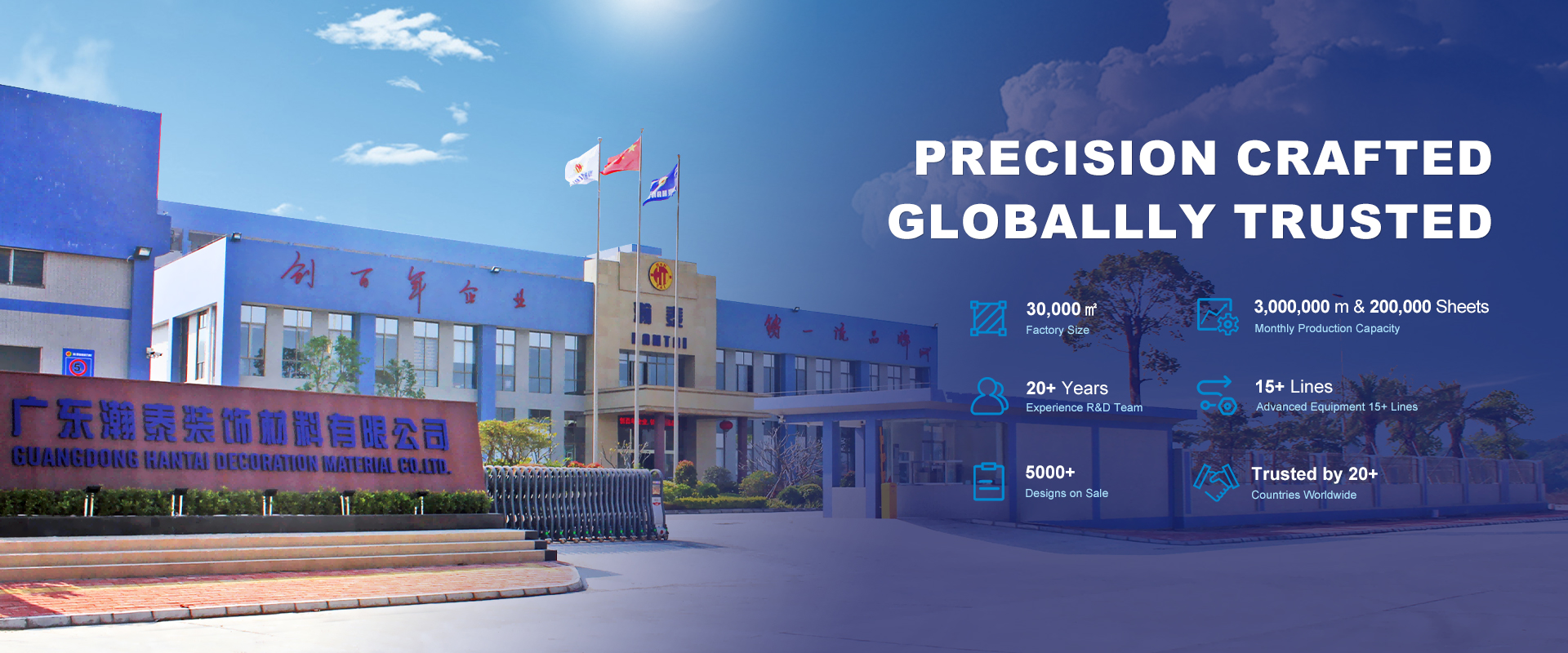
Through Guangdong Hantai Decoration Material Co,LTD, Hantai develops and manufactures PVC/PET decorative films, decorative acrylic sheets, and self-adhesive interior films for modern interior applications.
For buyers sourcing metallic decorative materials, the question is not simply which color is the brightest.
It is:
How can a decorative film create a refined metallic appearance while maintaining consistency, application performance, and long-term project value?
1. Why Can “Too Much Metallic Effect” Reduce the Quality of an Interior?
A metallic finish attracts attention immediately.
That is its strength—and also its potential weakness.
When the metallic effect is excessively bright or visually aggressive, it can create:
Strong reflections
Visual clutter
Inconsistent appearance under different lighting
Difficult coordination with furniture
A less refined overall atmosphere
Higher sensitivity to fingerprints and surface marks
Luxury interior design usually depends on balance.
A metallic decorative surface needs to interact with:
Lighting + Furniture + Wall Color + Flooring + Hardware + Surrounding Materials
The finish should complement these elements rather than compete with them.
This is why a softer brushed metallic or satin metallic effect can sometimes be more suitable for premium interiors than a highly reflective mirror-like finish.
The correct design decision is application-dependent.
2. What Is a Balanced Metallic Decorative Effect?
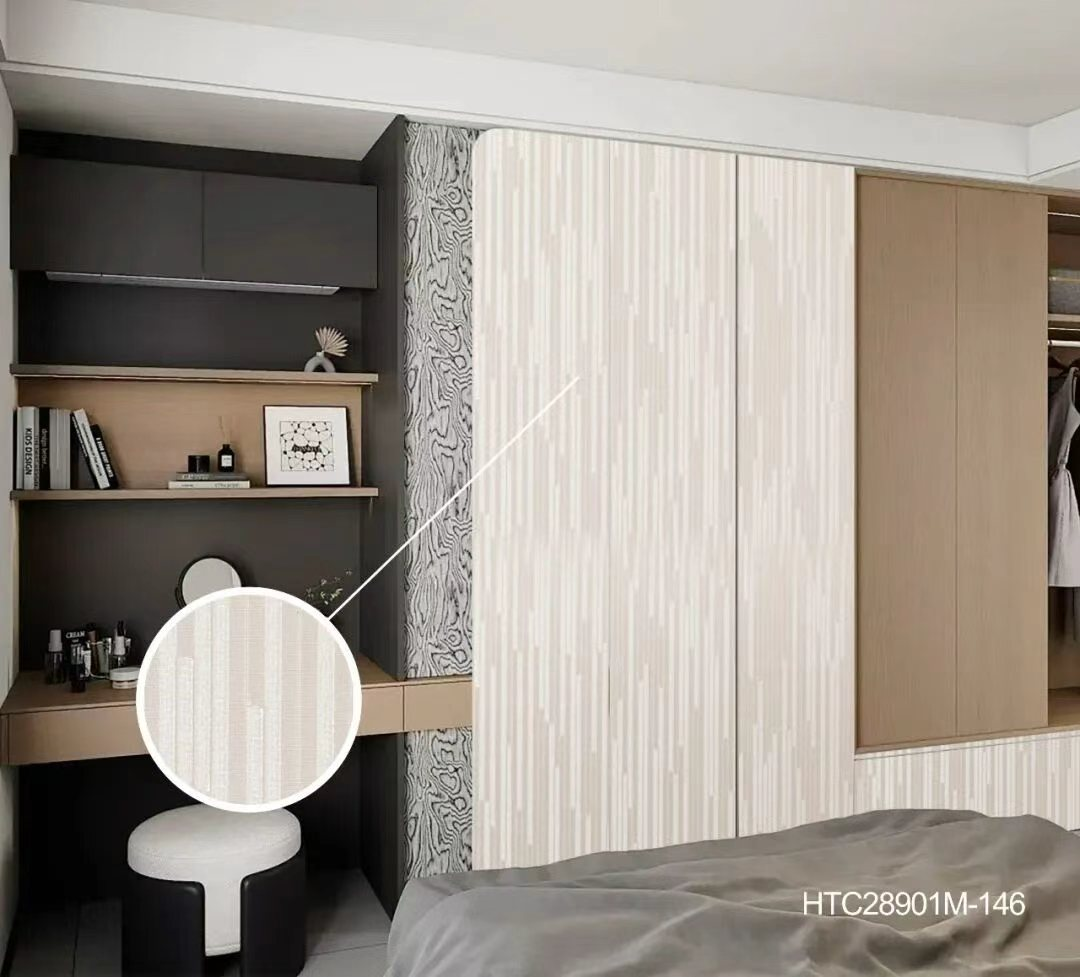
A balanced metallic effect combines several visual characteristics rather than maximizing one of them.
Buyers can evaluate the finish through:
Color
Is the metallic tone warm, neutral, cool, or slightly tinted?
Reflectivity
Does the surface provide a controlled metallic highlight or an excessively strong mirror effect?
Texture
Is the surface brushed, satin, matte, fine-grained, or smooth?
Uniformity
Does the metallic appearance remain consistent across the entire roll or sheet?
Lighting Response
Does the surface maintain an attractive appearance under daylight, warm lighting, and artificial commercial lighting?
Material Coordination
Can the finish work with stone, wood, glass, fabric, and architectural hardware?
A well-balanced metallic decorative film should therefore provide a controlled visual effect, not simply a high-gloss appearance.
3. What Should Buyers Look for When Selecting Metallic PVC/PET Decorative Film?
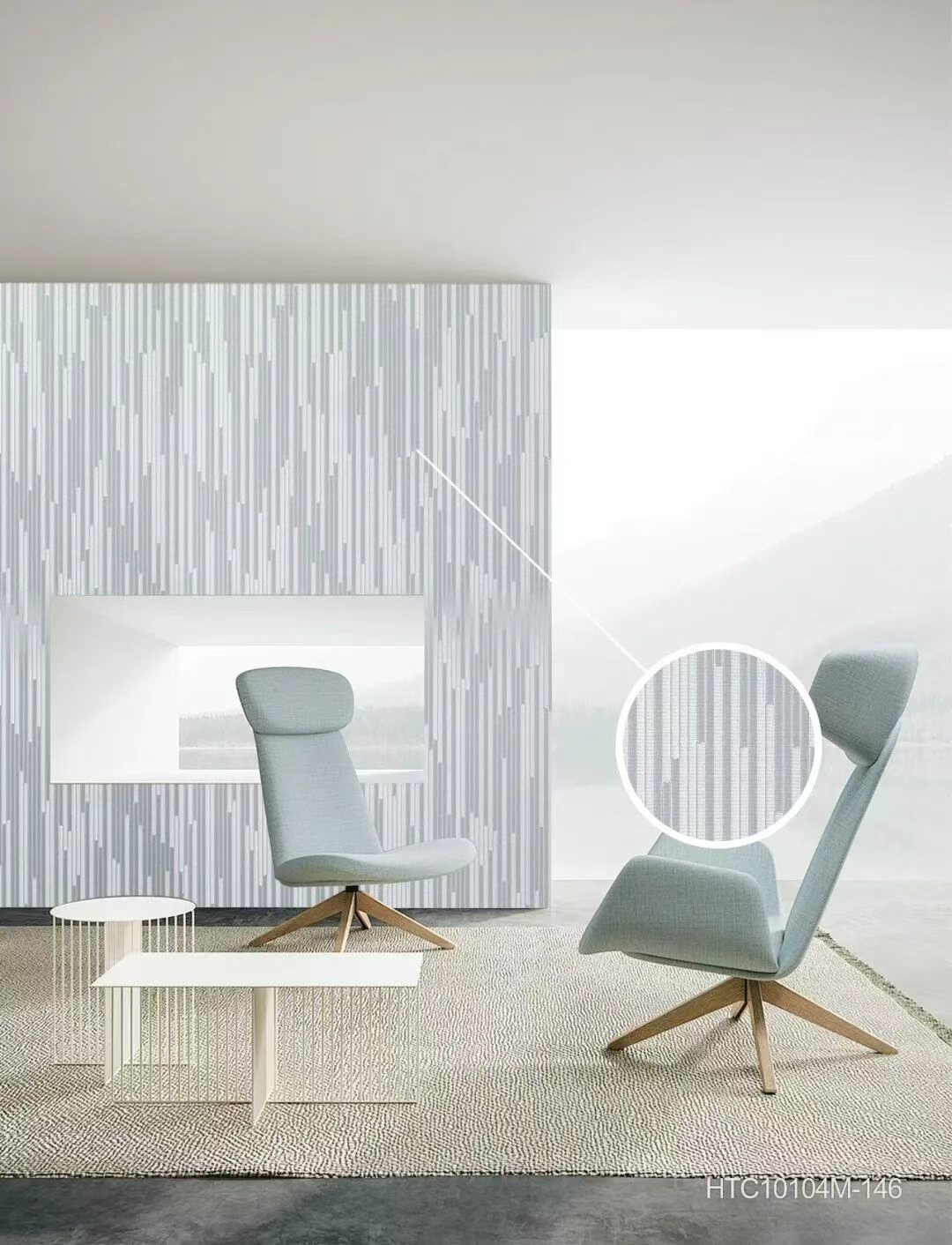
For a project buyer, color names alone are not enough.
“Gold” can mean:
Bright gold
Champagne gold
Brushed gold
Satin gold
Antique gold
Soft metallic gold
The same applies to silver, bronze, copper, and other finishes.
A buyer should request a sample and evaluate:
Color + Gloss + Texture + Reflectivity + Batch Consistency
This is especially important for large projects where the same material may be used across many furniture panels.
A finish that looks excellent on a small sample may appear different when applied across a large surface.
4. PVC Decorative Film vs. PET Decorative Film: What Should Buyers Consider?
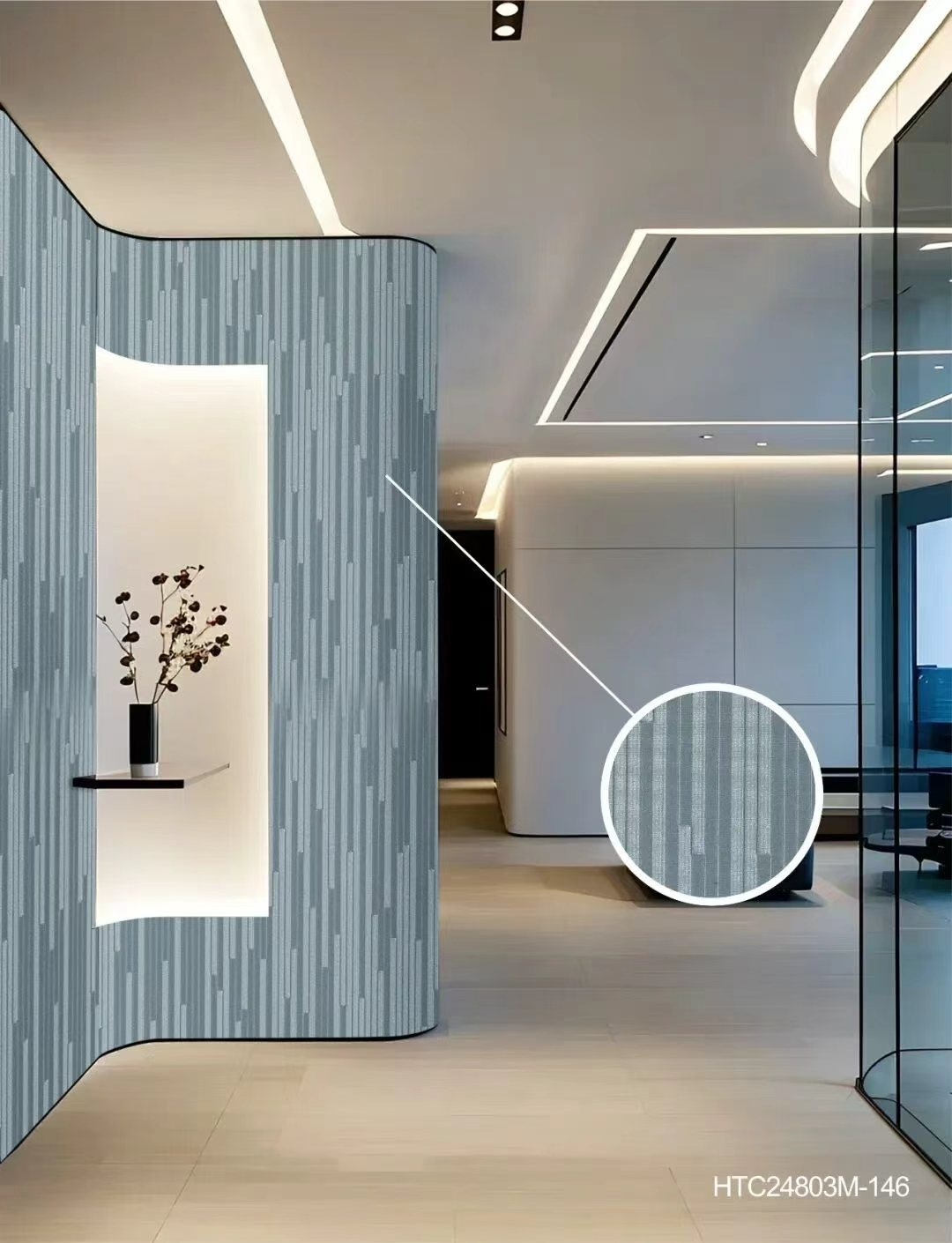
Both PVC and PET decorative films can be used for interior decorative applications, but the appropriate choice depends on the project requirements.
PVC Decorative Film
PVC decorative film is commonly considered for applications requiring:
Flexible processing
Complex surface coverage
Furniture decoration
Cabinet applications
Profile or panel wrapping
Cost-sensitive project solutions
Its flexibility can make it suitable for certain formed or wrapped surfaces.
PET Decorative Film
PET decorative film can be attractive for projects that place greater emphasis on:
Surface appearance
Contemporary decorative effects
Smooth visual finish
Certain performance requirements
Premium furniture applications
The correct selection should be based on the substrate, forming process, adhesive system, surface requirements, and intended end use.
Therefore, buyers should ask the supplier to recommend the material according to the actual application instead of treating PVC or PET as a universally better option.
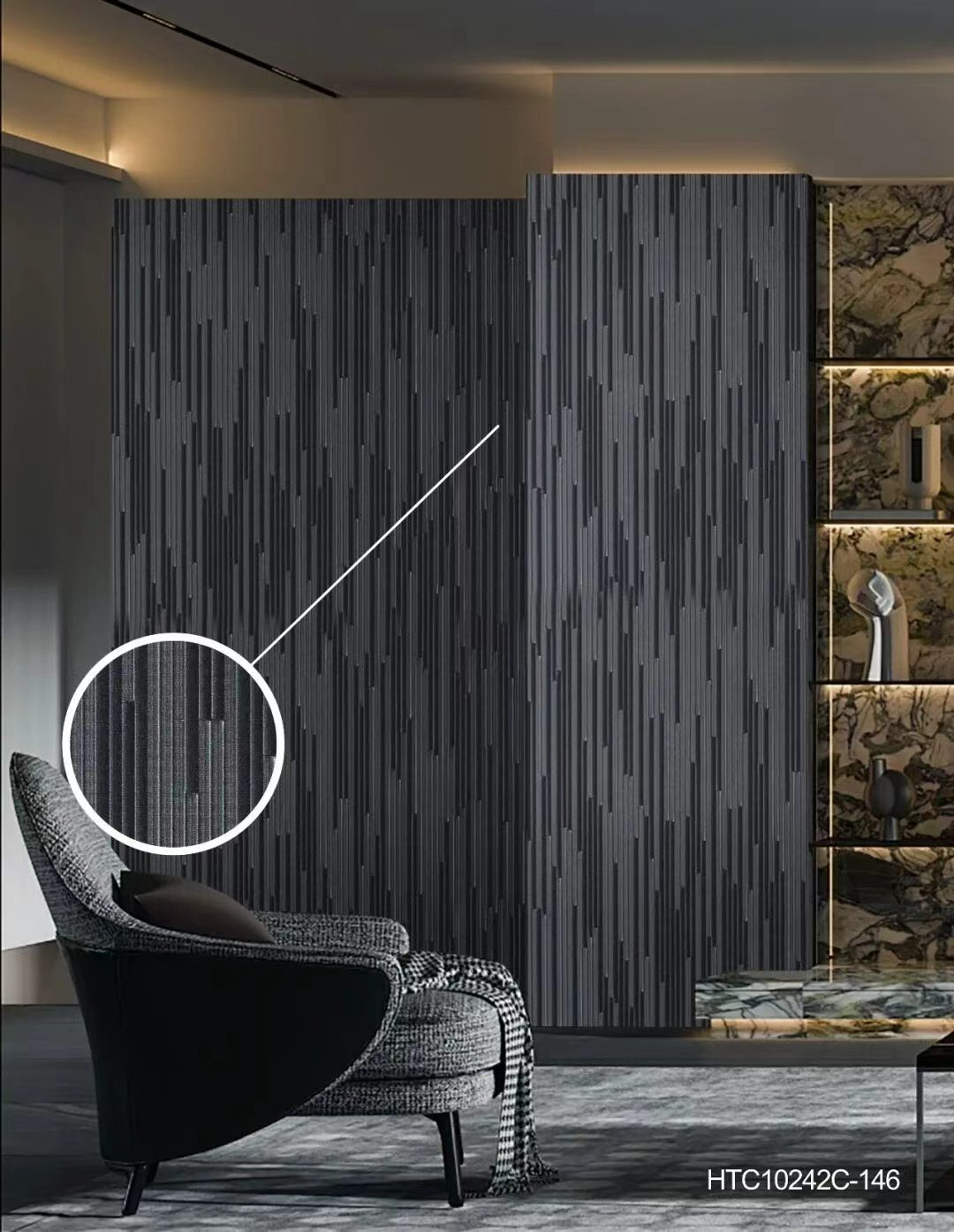
5. Which Technical Parameters Matter Most?
For procurement teams, a decorative film should be evaluated through measurable specifications.
| Technical Parameter | Why It Matters |
|---|---|
| Film Material | PVC / PET |
| Film Thickness | Affects handling and application |
| Width | Influences production efficiency |
| Surface Finish | Matte / satin / brushed / glossy |
| Metallic Effect | Defines visual intensity |
| Color | Must match approved sample |
| Surface Texture | Influences tactile and visual perception |
| Print / Pattern | For customized decorative designs |
| Adhesion Compatibility | Important for lamination |
| Flexibility | Relevant to forming and wrapping |
| Surface Resistance | Based on end-use requirement |
| Light / UV Resistance | Relevant to exposed applications |
| Chemical Resistance | Important for cleaning environments |
| Roll Length | Affects production planning |
| Packaging | Important for export transportation |
The exact performance values should come from the manufacturer's actual technical documentation.
6. Why Surface Texture Can Be More Important Than Color
Two films may have almost the same color but look completely different because of their surface texture.
For example:
Glossy Metallic
creates a stronger highlight and a more reflective appearance.
Brushed Metallic
creates directional lines and a more controlled industrial effect.
Satin Metallic
creates a softer transition between light and shadow.
Matte Metallic
can provide a more understated and contemporary appearance.
For luxury interiors, surface texture can therefore be as important as color.
A designer may prefer a bronze shade, but the final choice may depend more heavily on whether that bronze is:
High Gloss → Brushed → Satin → Matte
This is why sample approval should cover both color and surface finish.
7. Why Fingerprint Visibility Matters for Metallic Decorative Materials
A decorative surface can look excellent in the showroom and then look very different after repeated handling.
Cabinet doors, furniture panels, elevator surfaces, retail fixtures, and other high-contact areas can be touched frequently.
Highly polished surfaces may make fingerprints and handling marks more noticeable.
A brushed or satin finish can make minor visual marks less conspicuous under normal viewing conditions.
This does not mean a brushed surface is fingerprint-proof.
Instead, the procurement objective is to choose a surface finish that matches:
Aesthetic Expectations + Cleaning Frequency + Touch Frequency + Maintenance Requirements
This practical consideration can have a major impact on how a premium decorative surface performs after installation.
8. Why Batch Consistency Matters for Large Interior Projects
Imagine a hotel project using metallic decorative film for:
300 wardrobe doors + 300 vanity panels + 600 wall panels
The problem is no longer whether the first roll looks good.
The question becomes:
Will the 20th roll look the same as the first roll?
Small differences in:
Color
Gloss
Metallic density
Texture
Surface finish
can become visible when multiple panels are installed next to one another.
For project procurement, batch consistency should therefore be treated as an important supplier-selection criterion.
Buyers should define the approved sample as the visual reference and ask how the manufacturer controls consistency between production batches.
9. What Application Conditions Should Buyers Consider?
The same decorative film may perform differently depending on the substrate and application process.
Important variables include:
Substrate material
Surface flatness
Adhesive system
Lamination temperature
Pressure
Production speed
Forming radius
Cleaning conditions
Indoor humidity
UV exposure
For example, a film used on a flat cabinet panel may have different requirements from a film applied to a three-dimensional furniture profile.
Therefore, a professional supplier should ask about the application process, not only the color requested.
10. Application Scenario: Luxury Kitchens and Cabinets
Metallic decorative film can be used on:
Cabinet doors
Kitchen panels
Storage systems
Island furniture
Decorative side panels
Brushed or satin metallic surfaces can coordinate with:
Stone countertops
Dark wood
Warm lighting
Stainless-steel appliances
Minimalist hardware
Instead of creating a fully metallic interior, designers can use the metallic finish selectively as an accent.
This creates a more controlled visual hierarchy.
11. Application Scenario: Hotel Interiors
Hotels are particularly suitable for balanced metallic effects because the material can create visual identity without requiring major architectural changes.
Potential applications include:
Guestroom furniture
Wardrobe panels
Bathroom vanities
Reception counters
Feature walls
Decorative wall panels
Public-area furniture
For hospitality projects, buyers should pay particular attention to:
Batch Consistency + Surface Durability + Cleaning Compatibility + Production Repeatability
A visually attractive material that cannot be reproduced consistently across multiple floors can create significant installation problems.
12. Application Scenario: Luxury Villas and Residential Renovation
In premium residences, metallic materials are often used as highlights rather than complete surfaces.
A designer may use:
Brushed Champagne Film + Natural Wood
or:
Soft Bronze Film + Marble
or:
Satin Silver Film + Neutral Stone
The objective is to create contrast and visual depth without making the interior feel overly decorative.
This is where the concept of balanced elegance becomes especially useful.
The metallic finish should support the surrounding materials rather than dominate them.
13. Application Scenario: Commercial and Retail Interiors
Retail spaces often need materials that immediately communicate brand identity.
Metallic decorative films can be used on:
Display fixtures
Wall panels
Counters
Shelving
Feature structures
Brand-specific furniture
A custom metallic finish can help create a consistent visual language across stores.
For multi-location retail projects, repeatability becomes critical.
The material should remain visually consistent across:
Store A → Store B → Store C → Future Expansion
That makes factory-level production control an important part of the sourcing decision.
14. Standard Decorative Film vs. Customized Decorative Film
The difference can be summarized as follows:
| Feature | Standard Decorative Film | Customized Decorative Film |
|---|---|---|
| Color | Existing catalog | Project-specific |
| Surface Texture | Standard | Customized where available |
| Metallic Intensity | Fixed | Adjustable through finish selection |
| Size | Standard roll | Project-specific options |
| Branding | Usually limited | OEM/private-label options |
| Development | Existing SKU | Sample development |
| Application | General | Project-specific |
| Packaging | Standard | Customized requirements |
| Bulk Production | Standardized | Project planned |
| Design Differentiation | Moderate | Higher |
Standard products can be efficient for routine replenishment.
Customized products become more valuable when the project requires a particular finish, color, texture, or visual identity.
15. What Should Interior Designers Send to the Factory?
The more complete the initial specification, the more accurately the manufacturer can assess the project.
Recommended information includes:
Product Requirement
PVC or PET decorative film.
Color Reference
Pantone, physical sample, or approved color reference where available.
Surface Finish
Matte, satin, brushed, glossy, or other requested texture.
Thickness
Target film thickness.
Width
Required roll width.
Substrate
MDF, plywood, metal, acrylic, or other material.
Application Method
Flat lamination, wrapping, vacuum forming, or another process.
Quantity
Estimated order quantity or annual consumption.
Application Environment
Residential, hospitality, commercial, or other.
Packaging Requirement
Standard export packing or customized packing.
This allows the factory to determine whether the proposed decorative film is technically suitable for the application.
16. Why Sample Approval Should Come Before Bulk Production
For decorative films, a sample can reveal issues that cannot be identified from a product name.
Buyers should evaluate:
Actual color
Metallic appearance
Surface texture
Gloss level
Visual uniformity
Substrate compatibility
Processing behavior
For a project, the sample should become the reference for production.
A useful workflow is:
Reference → Factory Sample → Application Trial → Buyer Approval → Mass Production
This is particularly important when the project involves a customized metallic effect.
17. What Quality-Control Points Should a Decorative Film Factory Manage?
A quality-oriented decorative material factory should manage multiple stages.
Raw Material Inspection
Check incoming materials against specifications.
Surface Appearance
Inspect color, gloss, texture, and visible defects.
Thickness Control
Maintain consistency within the agreed product specification.
Width Control
Verify roll dimensions and production consistency.
Adhesion / Lamination Compatibility
Evaluate according to the intended application.
Batch Comparison
Compare production output with the approved sample.
Packaging Inspection
Ensure finished rolls or sheets are properly protected for storage and transportation.
For export projects, production consistency should be documented rather than left entirely to visual judgment.
18. How Hantai Interprets “Innovation for U”
Hantai Decoration's message is:
HANTAI DECORATION
INNOVATION FOR U
The idea behind this positioning is not simply to create more decorative effects.
Innovation should solve a practical design or procurement problem.
For a metallic decorative film, innovation can mean:
More Controlled Color
More Refined Surface Texture
Better Application Compatibility
More Consistent Production
More Flexible Customization
More Efficient Project Supply
This is especially relevant to B2B customers because the final material needs to work not only on a sample board, but also in real production.
19. How Guangdong Hantai Decoration Material Co,LTD Supports Custom Projects
Guangdong Hantai Decoration Material Co,LTD integrates R&D, design, production, and sales of modern PVC/PET decorative films, decorative acrylic sheets, and self-adhesive interior films.
For buyers, the advantage of an integrated manufacturer is the ability to discuss:
Design → Material → Finish → Application → Sample → Production → Packaging
under one supply chain.
For customized metallic decorative film projects, the factory can develop products around specific requirements such as:
Color
Surface texture
Metallic effect
Size
Material
Application
Packaging
Branding
The exact customization range should be confirmed according to the product and production process.
20. Why One-Stop Factory Support Matters for Project Procurement
When a project involves several suppliers, every additional handoff creates another opportunity for specification differences.
A one-stop manufacturer can simplify coordination between:
Product Development
Production
Quality Control
Packaging
Delivery
This is particularly valuable when the buyer needs both standard catalog products and customized products for the same project.
Instead of managing separate material suppliers, designers and distributors can communicate the project specification directly with the source manufacturer.
21. How Should Buyers Evaluate the Total Cost?
The initial price per roll is only one part of the procurement equation.
A more complete calculation is:
Total Material Cost = Film Price + Processing Cost + Waste + Installation Impact + Replacement Risk
For customized materials, waste can become especially important if the film width is poorly matched to the buyer's production layout.
Buyers should therefore consider:
Roll width
Usable area
Waste rate
Application efficiency
Storage
Packaging
Delivery
Defect/replacement risk
A slightly higher material price can sometimes be commercially reasonable when the product provides better application efficiency or lower waste.
The actual calculation should use the buyer's production data.
22. Procurement Checklist for Metallic Decorative Film
Before placing a bulk order, buyers should confirm:
PVC or PET material
Exact color reference
Metallic intensity
Surface finish
Thickness
Width
Roll length
Substrate compatibility
Application method
Adhesive compatibility
Surface performance requirements
Sample approval
Batch consistency standard
Packaging
Delivery schedule
This checklist helps transform “I want a luxury metallic finish” into an actionable manufacturing specification.
23. Why Balanced Elegance Can Be a Better Design Strategy
The most expensive-looking interior is not necessarily the one with the most metallic surfaces.
Luxury often comes from proportion.
A well-designed space may use metallic decoration in only a few strategic locations:
10% Metallic Accent + 90% Supporting Materials
rather than covering every surface with reflective finishes.
A brushed metallic decorative film can serve as the accent material while allowing wood, stone, fabric, glass, and paint to maintain their own visual roles.
This is the concept behind Hantai's approach:
Not flashy metal effects. Perfectly-balanced elegance.
For designers, this gives the material a broader role than simply “gold decoration.”
It becomes a tool for controlling visual hierarchy.
24. Request a Customized Decorative Material Sample
For interior designers, building-material wholesalers, furniture manufacturers, and project buyers looking for a luxury decorative film, the first step should be to define the application rather than selecting a finish by color name alone.
Provide:
Reference image
Physical color sample where available
Required metallic effect
Surface finish
Material preference
Thickness
Width
Substrate
Application process
Estimated quantity
Destination market
Target delivery date
Guangdong Hantai Decoration Material Co,LTD can then evaluate the project requirements and develop a suitable sample and production specification.
From:
Design Concept → Material Selection → Sample → Application Trial → Approval → Mass Production → Export Delivery
Hantai aims to turn decorative material design into a practical manufacturing solution.
25. Conclusion: Luxury Is Not About Making the Metallic Effect Stronger
For modern interior projects, a decorative metallic finish should do more than attract attention.
It should provide:
Controlled Color
Refined Texture
Consistent Appearance
Application Compatibility
Reliable Batch Production
Flexible Customization
A PVC/PET decorative film with a balanced metallic effect can be used across bathrooms, kitchens, wardrobes, hotels, villas, commercial interiors, furniture, and feature walls when its specification is matched to the application.
For buyers, the right question is therefore not:
“How shiny is this metallic film?”
It is:
“Does this metallic finish create the right visual effect, perform in the intended application, and remain consistent throughout the project?”
That is where a specialized source manufacturer can make a difference.
Guangdong Hantai Decoration Material Co,LTD integrates R&D, design, production, and sales to provide PVC/PET decorative films, decorative acrylic sheets, and self-adhesive interior films for global interior-material buyers.
HANTAI DECORATION — INNOVATION FOR U
Not flashy metal effects. Perfectly-balanced elegance.
Website: www.hantaipvc.com