



Have you ever selected a PVC decorative film from a sample and discovered that it looked different after installation?
In many cases, the material has not changed.
The lighting has.
Color is always perceived through light. Natural daylight, warm LED lighting, cool white lighting and different illumination levels can all change how a PVC decorative film appears.
For professional interior and furniture projects, understanding this relationship can significantly reduce color selection mistakes.
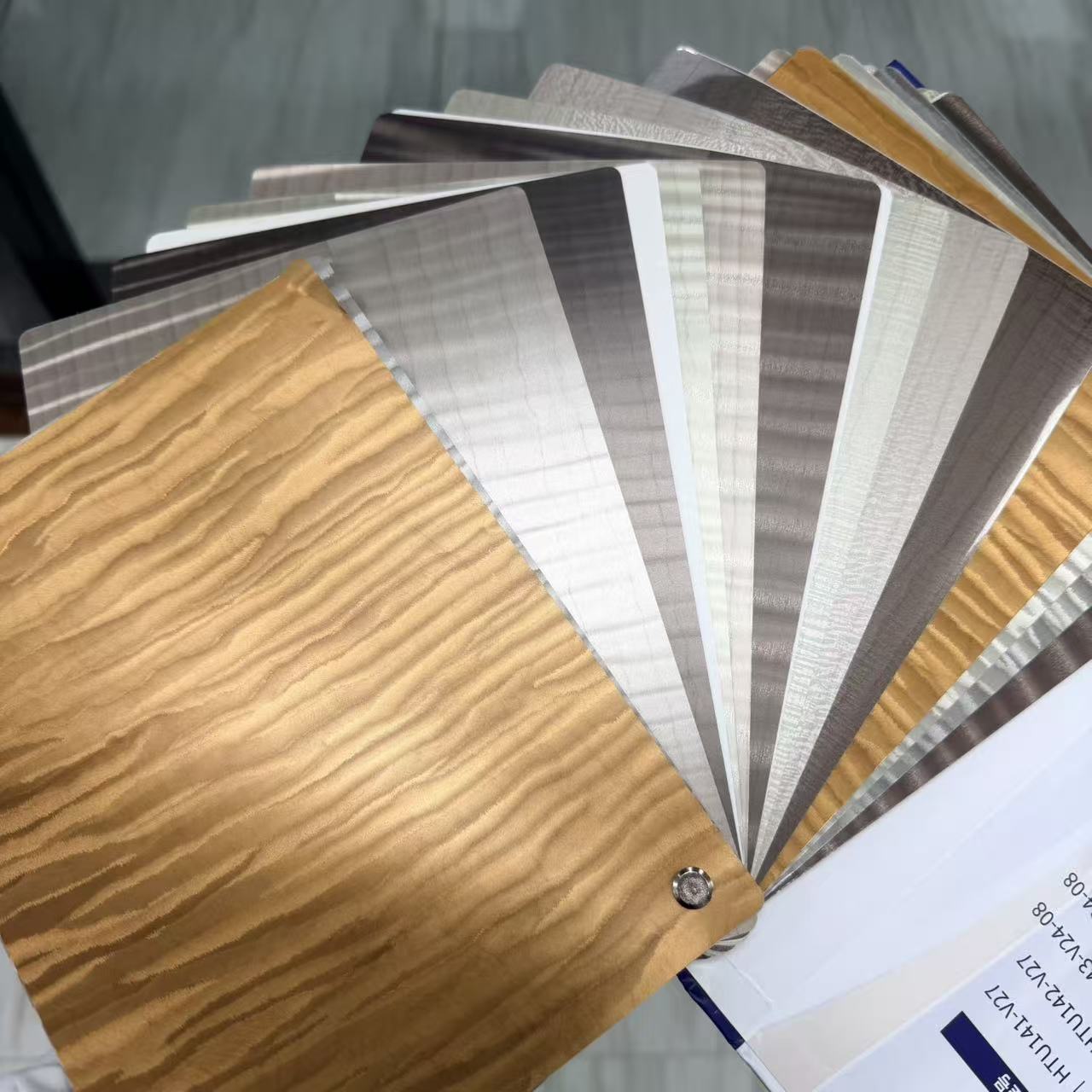
PVC Decorative Film Does Not Exist Independently from Light
When we look at a decorative surface, we are actually seeing light reflected from that surface.
Different light sources contain different spectral characteristics, which influence how our eyes perceive color.
This is why the same PVC decorative film may appear warmer in one room and cooler in another.
A wood grain sample viewed beside a window at midday may look natural and neutral.
The same sample under warm hotel lighting may appear more yellow or reddish.
Under cool white lighting, it may appear slightly greyer.
This is a normal part of color perception.
Understanding Color Temperature
Artificial lighting is commonly described using color temperature.
Warm light generally creates a yellowish or warm atmosphere, while cooler light produces a whiter or slightly bluish appearance.
Warm lighting can strengthen the warmth of beige, brown and natural wood tones.
As a result, warm oak or walnut PVC decorative film may appear richer under warm lighting.
Cooler lighting tends to emphasize grey and neutral characteristics.
This can work particularly well with modern grey wood grain, white surfaces, cool stone patterns and minimalist interiors.
Neither lighting condition is automatically better.
The important point is that the decorative film should be evaluated under conditions similar to the actual project.
Natural Light Changes Throughout the Day
Natural light is not constant.
Morning, midday and afternoon light can create different visual effects.
The orientation of the room also matters.
Spaces receiving strong direct sunlight may make decorative surfaces appear brighter and more saturated.
Rooms with limited daylight may make the same colors appear deeper or more muted.
For large residential and commercial projects, it is therefore useful to evaluate PVC decorative film samples at different times of day.
This is particularly important when the selected color will cover large surfaces.
Dark Colors Need Adequate Lighting
Dark PVC decorative film can create elegance and depth, but lighting determines whether the texture remains visible.
Dark walnut, charcoal grey and black surfaces may lose detail in poorly illuminated spaces.
If a designer wants to use dark wood grain decorative film, directional lighting or sufficient ambient lighting can help highlight the surface pattern.
The same principle applies to deep embossing.
Without sufficient light, a sophisticated texture may appear flatter than expected.
Matte Surfaces React Differently from Glossy Surfaces
Surface finish also changes the way light interacts with decorative film.
Glossy surfaces reflect light more directly, producing stronger highlights and more visible reflections.
Matte PVC decorative film diffuses light more softly, which generally creates a quieter and more refined appearance.
For large furniture surfaces, matte finishes can help reduce excessive reflection.
For decorative accents, higher-gloss surfaces may create stronger visual impact.
Therefore, when evaluating color under different lighting conditions, designers should also consider gloss level.
Color and gloss should never be evaluated completely separately.
Why Showroom Lighting Can Be Misleading
Samples are often selected in showrooms, offices or exhibition spaces.
However, the lighting in these environments may be completely different from the final project.
A sample that appears perfect under strong showroom lighting may look darker when installed in a residential corridor.
A warm wood grain selected under yellow lighting may appear more neutral when installed in an office with cool white LEDs.
This is why professional projects should not rely exclusively on one lighting environment.
Test Samples in the Actual Project Environment
One of the most effective ways to reduce color mistakes is also one of the simplest: take the sample to the project site.
Place the PVC decorative film next to the actual flooring, wall paint, stone, metal and furniture materials.
Then observe it under the lighting that will actually be used.
For important projects, larger samples are preferable because very small samples may not fully represent the visual effect of a large installed surface.
A simple site evaluation can often prevent expensive changes later.
Lighting Is Part of Material Selection
Lighting should not be treated as something that is considered only after furniture and decorative materials have already been selected.
In professional interior design, lighting and surface materials should be considered together.
The color, texture and gloss of PVC decorative film can all respond differently depending on the lighting environment.
Understanding this relationship helps designers choose materials with greater confidence.
HANTAI PVC Decorative Film for Different Interior Styles
HANTAI offers a wide selection of PVC decorative film designs including wood grain, solid colors and other decorative surfaces.
Different colors and finishes can create different effects under natural and artificial lighting.
When choosing decorative film for furniture or interior projects, viewing the sample under the actual lighting conditions can make a significant difference.
Because the right color is not simply the color you see on a sample card.
It is the color you see in the finished space.