



In everyday life, plastic products are everywhere—and in the fields of home furnishing, building materials, furniture, and interior decoration, film-based materials are ubiquitous. From kitchen cabinet doors and wardrobe surfaces to wall finishes and commercial displays, PVC decorative filmis increasingly applied across residential and commercial spaces.
However, many consumers—and even some industry practitioners—still believe that all film coverings are essentially the same, differing only in price or pattern. In truth, eco-friendly PVC decorative film and ordinary films differ fundamentally in material structure, application process, service life, environmental performance, and decorative capability. These differences ultimately determine whether a material can truly serve as a stable, long-lasting, and sustainable decorative solution.
With rising environmental regulations, higher consumer expectations for living quality, and the industrialization and standardization of furniture manufacturing, PVC decorative film has evolved from an “optional material” into one of the mainstream choices for interior decoration.
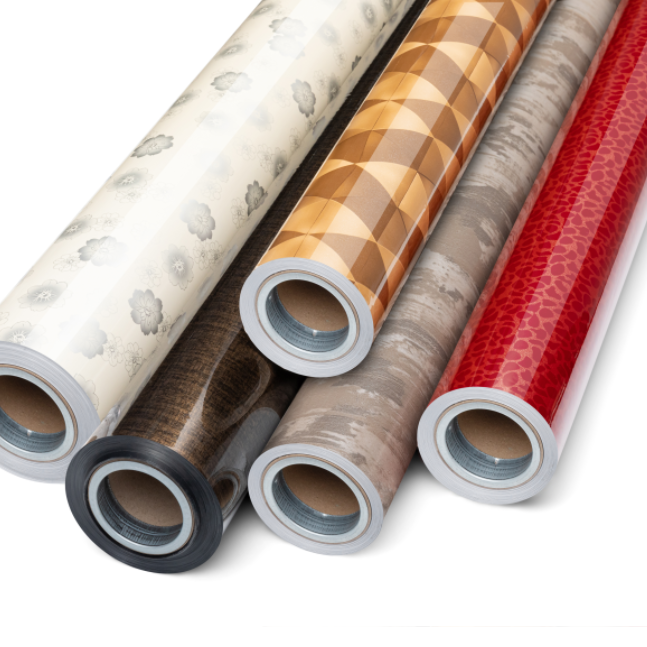
Ordinary Films Are Simply “Applied” — PVC Decorative Film Is Fully Integrated
The first distinction between ordinary films and PVC decorative films lies in the application method.
Ordinary Films
·Typically applied at room temperature using standard adhesives.
·Adhesive only bonds superficially to the panel surface.
·Over time, environmental changes (temperature, humidity), board ·expansion/contraction, and adhesive aging often lead to bubbling, edge lifting, and delamination.
·Defects typically become visible within one to two years.
PVC Decorative Film
·Applied using vacuum membrane pressing machines under high temperature and high pressure.
·The film softens and bonds deeply to the substrate, forming a stable, homogeneous composite structure.
·This deep integration ensures long-term adhesion and enhanced durability.
Ideal for high-demand applications such as cabinets, wardrobes, doors, and more.
In short:
·Ordinary films are just “stuck on.”
·PVC decorative films are “integrated in.”
Why Is PVC Decorative Film More Eco-Friendly and Safe?
Today, environmental safety is a top priority for consumers. Ordinary films may come from mixed material sources and employ adhesives of inconsistent quality, potentially releasing unpleasant odors or exceeding volatile organic compound (VOC) safety limits.
In contrast, high-quality PVC decorative film is:
·Manufactured with controlled raw material formulations
·Non-toxic and odorless
·Non-irritating to skin and respiratory systems
This makes PVC decorative film significantly safer for indoor environments—especially for users sensitive to paints, coatings, or chemical treatments.
From a sustainability standpoint, PVC decorative film also helps reduce reliance on natural wood resources. When applied to MDF, particleboard, fiberboard, or plywood, it can realistically replicate wood grain, stone, or other textures, offering beauty and performance without sacrificing natural resources.
More Than Surface Decoration — Real Performance Beyond Appearance
Traditional surface treatments such as painting or simple film coverings focus mainly on visual improvement. They rarely address long-term durability.
PVC decorative film, however, combines aesthetics with real performance:
·Corrosion Resistance – Resists common cleaning agents, moisture, and oil
·Environmental Stability – Stable against cracking or peeling
·Strong Adhesion – Long-lasting bonding with proper processing
·Flexibility & Conformability – Suitable for curved or complex surfaces
Because of these capabilities, PVC decorative film is no longer a mere surface finish—it has become a functional component of modern furniture systems.
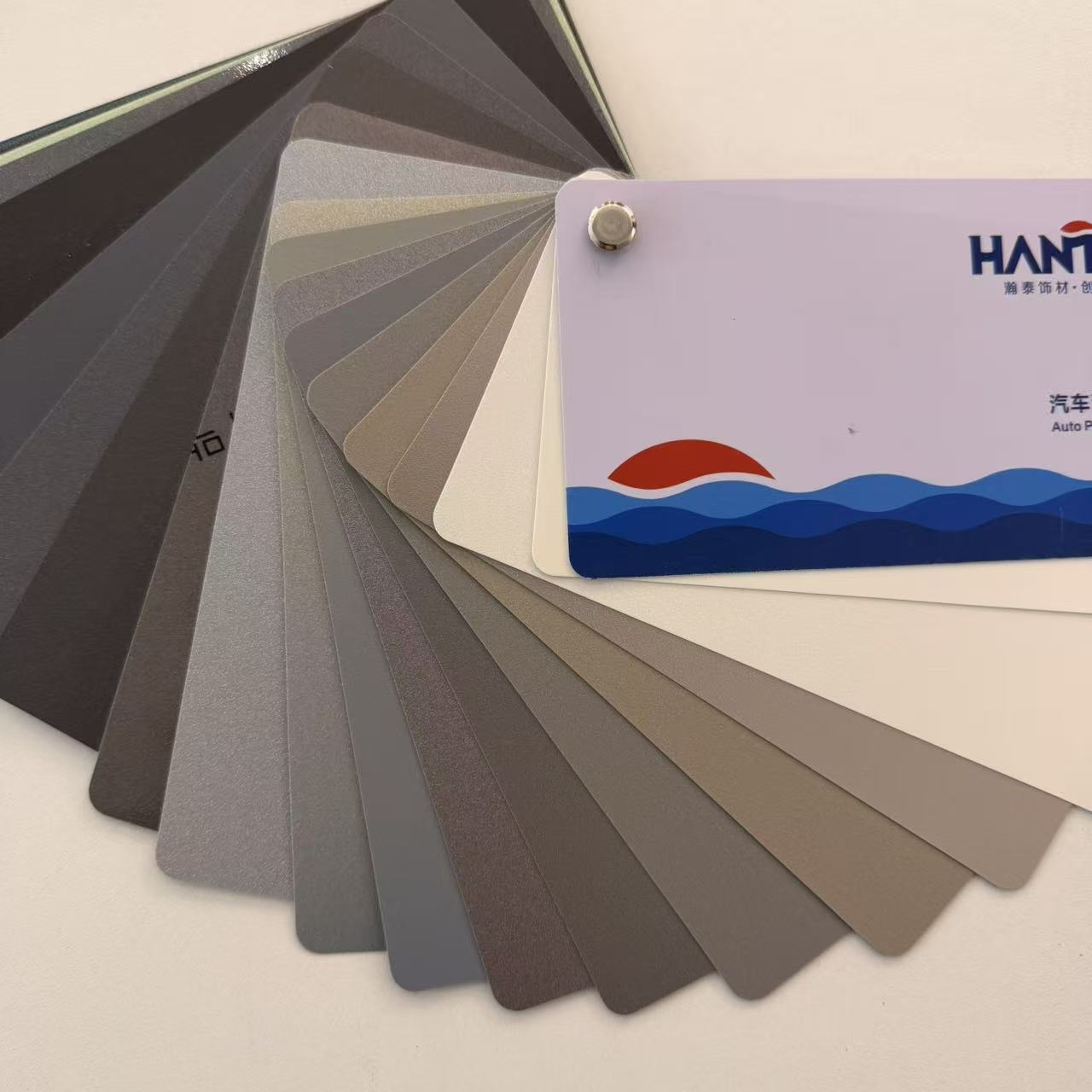
PVC Decorative Film Enables Versatile Design Possibilities
Thanks to advanced printing and embossing technologies, PVC decorative film offers rich decorative effects:
·Classic wood grains
·Realistic stone textures
·Contemporary solids and metallic finishes
·Fabric and abstract patterns
For example, in kitchen spaces:
·Minimal black and white schemes deliver modern elegance
·Warm wood tones create a natural, calming environment
·Stone textures and high-gloss surfaces elevate perceived quality
This design versatility makes PVC decorative film a powerful visual language for designers and manufacturers alike.
Why PVC Decorative Film Has Become the Industry Standard?
PVC decorative film’s rise as the preferred material among film-type products is not accidental. Its technical maturity, performance stability, environmental safety, and design flexibility have made it the mainstream choice.
While its initial cost may be slightly higher than ordinary films, the long-term value—including extended service life, lower maintenance, high customer satisfaction, and stronger brand reputation—makes it a superior investment.
This is why more and more furniture manufacturers, design firms, and construction projects specify PVC decorative film as the standard material.
Choosing a Reliable PVC Decorative Film Supplier Matters
As the market transitions from ordinary films to PVC decorative films, selecting a professional, experienced, and quality-driven manufacturer is critical.
Manufacturers with expertise in PVC decorative film production—like HANTAI—focus on:
·Material research and formulation control
·Process optimization
·Quality assurance systems
·Reliable supply capacity
·Consistent performance and environmental compliance
This ensures material choices that deliver both aesthetic excellence and long-term stability.
Conclusion
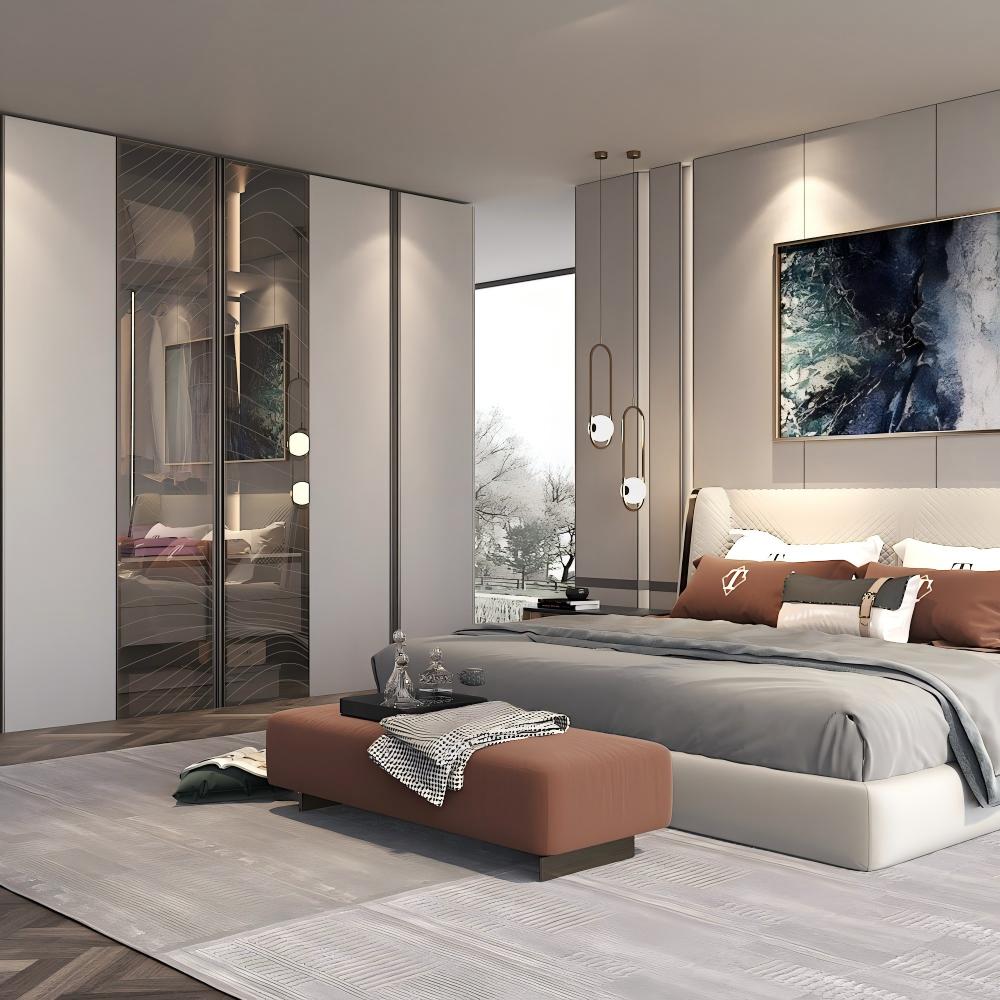
When choosing decorative materials for furniture manufacturing, interior design, or engineering projects, PVC decorative film stands out for its durability, safety, aesthetic versatility, and environmental benefits. It is not merely a surface treatment—it is a foundational material solution shaping the future of interior quality and sustainability.
Selecting the right material is not just a choice of product—it’s a decision for future performance and sustainable quality.