



For a long time, surface materials in the furniture manufacturing industry were primarily evaluated from a decorative perspective—whether the color looked appealing, whether the texture appeared realistic, and whether it aligned with current design trends. However, as furniture manufacturing moves steadily toward large-scale production, standardization, and globalization, the role of surface materials is undergoing a fundamental transformation.
PVC decorative film is emerging at the center of this shift. No longer just a thin layer applied to a board surface, it is becoming a critical factor influencing manufacturing efficiency, quality stability, and delivery performance. Today, PVC decorative film functions as a key connector between design intent, production execution, and final application.
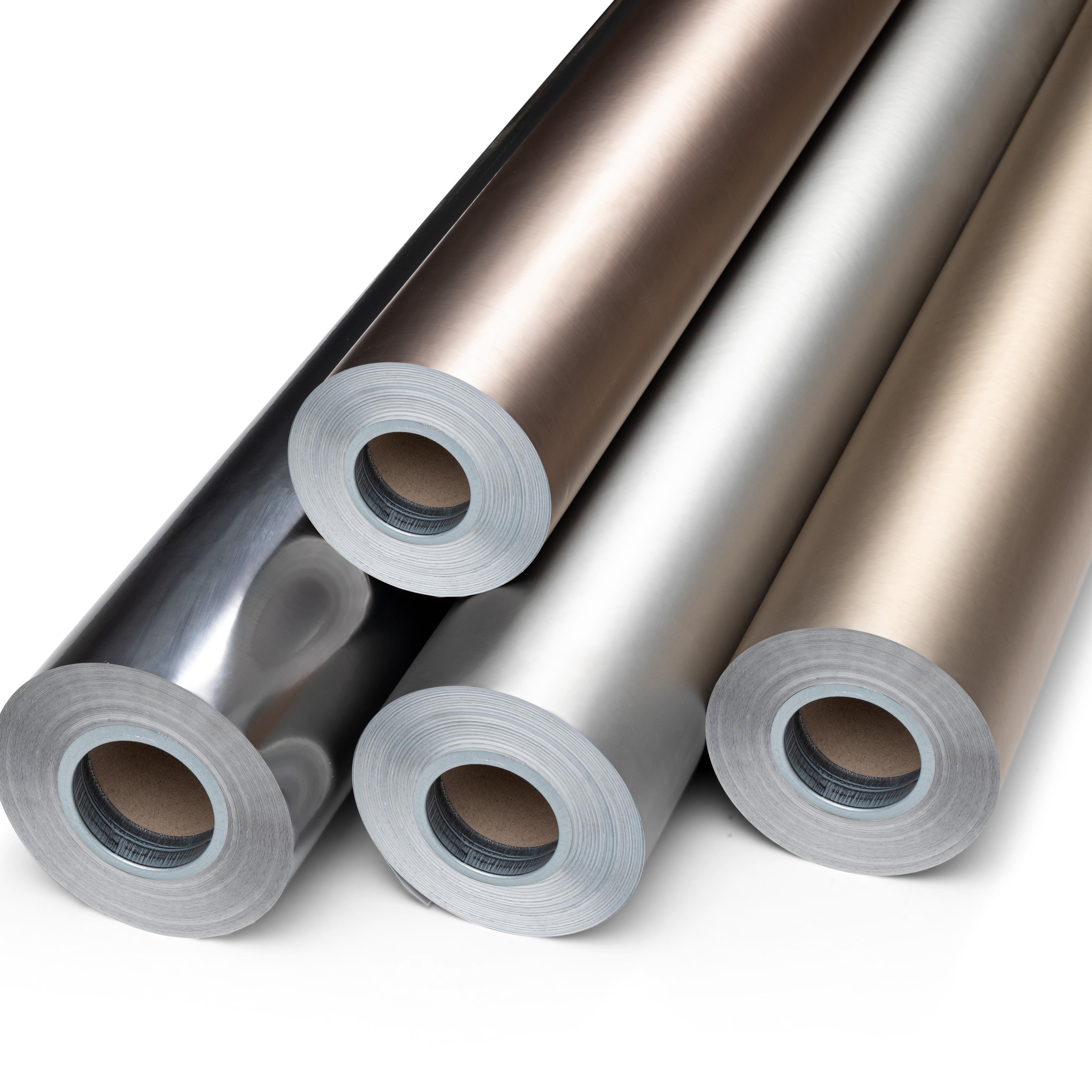
1. Changing Manufacturing Conditions Are Redefining the Value of PVC Decorative Film
Furniture manufacturers are now facing a set of unavoidable realities:
·Continuous increases in labor costs, placing pressure on labor-intensive processes
·Shorter delivery timelines and higher expectations for production speed
·A growing demand for customization and faster design updates
·Stricter requirements from overseas markets regarding environmental compliance, consistency, and stability
Under these conditions, the limitations of traditional surface finishing methods—such as spray painting and natural veneer—are becoming increasingly evident. PVC decorative film, with its stable processing characteristics, high controllability, and strong adaptability, is being recognized by more manufacturers as a rational long-term solution.
The value of PVC decorative film has expanded beyond aesthetics and into the realm of production management and risk control.
2. PVC Decorative Film Is Not Just a Material, but Part of a Manufacturing System
From a material standpoint, PVC decorative film is based on polyvinyl chloride and produced through printing, embossing, coating, and functional layer lamination. From a manufacturing perspective, however, it functions more like a controlled module within an integrated production system.
2.1 Predictability as a Core Advantage
In furniture manufacturing, predictability means:
·Consistent visual results across different production times
·Minimal variation between different production lines
·Reduced repair rates and after-sales risks
Through standardized formulations and industrial-scale production, PVC decorative film delivers high repeatability in color, texture, and gloss—an essential requirement for manufacturers focused on stable delivery.
2.2 Making Production Flow More Linear
Compared with traditional surface treatments that involve multiple steps and long waiting times, PVC decorative film allows production workflows to become more linear and continuous:
·Substrate preparation → lamination → finished product
·Fewer processes and clearer production rhythms
·Easier capacity planning and scheduling
This streamlined logic aligns closely with the principles of modern lean manufacturing.
3. From Design to Production: How PVC Decorative Film Shortens the Conversion Path
One long-standing challenge in furniture manufacturing is the gap between design concepts and mass production. PVC decorative film plays an important role in narrowing this gap.
3.1 High Fidelity in Design Reproduction
With advanced printing and embossing technologies, PVC decorative film can consistently reproduce:
·Wood grain, stone textures, fabric patterns, and other natural effects
·Matte, silk-touch, and soft-touch surface finishes
·Color systems aligned with different interior styles
Design concepts no longer rely on complex post-processing. Instead, manufacturers can move directly from material selection to prototyping and mass production.
3.2 Reducing Trial-and-Error Between Sampling and Mass Production
Because PVC decorative film delivers stable and repeatable performance, the difference between sample pieces and final products is significantly reduced. This leads to:
·Fewer sampling iterations
·Shorter development cycles
·Lower project risks
For manufacturers that frequently update their product lines, this is a decisive competitive advantage.
4. Typical Application Scenarios of PVC Decorative Film in Furniture Manufacturing
As technology and performance continue to improve, the application range of PVC decorative film is expanding.
4.1 Kitchen and Wardrobe Systems
PVC decorative film is widely used for:
·Cabinet and wardrobe doors
·Side panels and back panels
·Decorative trims and functional components
Its stain resistance, ease of cleaning, and stability make it particularly suitable for high-frequency usage environments.
4.2 Panel Furniture and Custom Furniture
In panel and custom furniture manufacturing, PVC decorative film enables:
·Multiple styles on standardized structures
·Fast color changes without efficiency loss
·Stable output even under mass customization
This makes “small batches, multiple designs” a viable and efficient production model.
4.3 Commercial and Project Furniture
In hotels, apartments, offices, and other project-based environments, PVC decorative film is increasingly preferred due to:
·Strong batch-to-batch consistency
·Predictable delivery schedules
·Stable surface performance
5. Quality Stability: The Key to Long-Term Use of PVC Decorative Film
For furniture manufacturers, visual appeal is only the starting point. Long-term stability ultimately determines material value.
Key performance factors include:
·Color retention over extended periods
·Stability under varying temperature and humidity conditions
·Adhesion reliability throughout the product lifecycle
Well-developed PVC decorative film solutions, supported by optimized material structures and process control, help reduce quality risks throughout the furniture’s service life.

6. The Direct Link Between PVC Decorative Film and Manufacturing Efficiency
In cost structures, material cost is only one component—manufacturing efficiency often plays a much greater role in determining profitability.
PVC decorative film directly contributes to efficiency by:
·Reducing the number of processing steps
·Lowering dependence on skilled labor
·Increasing first-pass yield rates
·Shortening production cycles and improving cash flow
When materials help factories produce faster and with fewer issues, their value extends far beyond price considerations.
7. From Material Purchasing to a Solution-Oriented Mindset
As furniture manufacturers mature, many are realizing that PVC decorative film should not be treated as a simple procurement item, but evaluated as part of a comprehensive manufacturing solution.
This evaluation includes:
·Compatibility with existing equipment
·Alignment with long-term product planning
·Reliability of supply and technical support
Only when PVC decorative film is fully integrated into the manufacturing system can its full value be realized.
8. The Evolving Role of PVC Decorative Film in Future Furniture Manufacturing
Looking ahead, as automation increases and market competition intensifies, the role of PVC decorative film will continue to expand:
·From surface decoration to efficiency optimization
·From optional material to system-level configuration
·From single products to integrated solution portfolios
PVC decorative film will influence not only appearance, but also delivery capability and market responsiveness.
Conclusion: When PVC Decorative Film Becomes Part of the Manufacturing Logic
In modern furniture manufacturing systems, materials no longer exist in isolation. They are closely interconnected with equipment, processes, and management strategies. PVC decorative film is increasingly proving to be an indispensable component of this system.
When material selection supports stability, efficiency, and controllability, manufacturers are better positioned to navigate complex and competitive markets with confidence.
If you are reassessing the role of PVC decorative film within your product and production systems, or exploring its potential across different furniture applications, ongoing dialogue and exploration can open the door to long-term competitiveness.