



In residential renovations, commercial space upgrades, and furniture surface refinishing, PVC self-adhesive film is increasingly becoming the preferred solution for designers, manufacturers, and end users alike. Without complex construction processes or large-scale equipment, it allows furniture, walls, and decorative surfaces to be transformed quickly and efficiently.
However, as its use becomes more widespread, one question continues to surface repeatedly:
Will PVC self-adhesive film cause irreversible damage to furniture or substrate surfaces?
This concern is not entirely unfounded. The market does contain self-adhesive films of inconsistent quality that may leave adhesive residue, discolor surfaces, or even “bite into” the substrate after prolonged use. But does this mean PVC self-adhesive film itself is inherently risky? Or is the real issue related to material formulation, process control, and application methods?
To answer this question properly, we need to step back and examine PVC self-adhesive film from the perspectives of material science, adhesion mechanisms, and real-world application conditions, in order to clearly understand its design intent, technical logic, and safety boundaries.
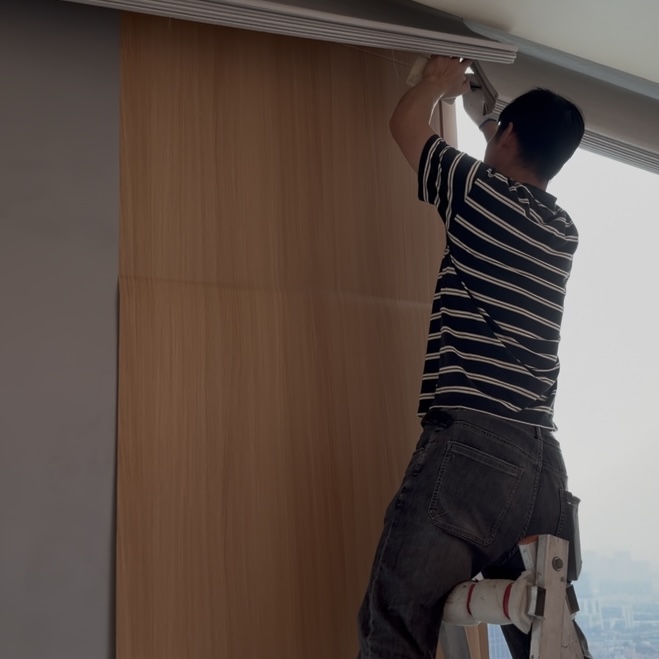
Why Modern Spaces Are Increasingly Relying on PVC Self-Adhesive Film
Traditional decorative methods—such as painting, spraying, laminating, or veneering—often involve long construction periods, high labor costs, and irreversible structural changes. The emergence of PVC self-adhesive film has fundamentally changed this approach.
As a functional decorative material based on PVC and integrated with a pressure-sensitive adhesive backing, PVC self-adhesive film is designed as a “apply-to-use, controllable-and-removable” solution. It can conceal surface imperfections and upgrade appearance without damaging the substrate structure. This makes it especially popular in the following applications:
Furniture surface refurbishment (MDF, particleboard, veneered solid wood)
Wall and cabinet upgrades in commercial spaces
Temporary or semi-permanent brand visual updates
Reversible decoration for rental properties
Yet precisely because of its “apply and remove” nature, users naturally question whether its adhesive strength could negatively affect the underlying surface.
What Actually Determines the “Safety” of PVC Self-Adhesive Film?
Evaluating whether PVC self-adhesive film can damage a substrate should not be based solely on how firmly it sticks. Instead, it must be analyzed across three core dimensions: adhesive system, material compatibility, and application/removal logic.
1. Adhesive System: The Key to Residue and Discoloration Control
High-quality PVC self-adhesive film does not rely on corrosive solvent-based adhesives. Instead, it uses a carefully formulated pressure-sensitive adhesive (PSA) system, characterized by:
No chemical reaction with MDF, particleboard, metal, or glass
Adhesion achieved through physical bonding rather than chemical penetration
Bond strength that can be released in a controlled manner with temperature and time
In Hantai’s ESTRY series PVC self-adhesive film, the adhesive is not designed for permanent intrusion, but for stable adhesion with controlled removability. During normal use, the film remains firmly bonded. When removal is required, moderate heat reduces the adhesive’s cohesive strength, allowing for clean peeling without residue.
2. Material Compatibility: Does the Film “Invade” the Substrate?
A common misconception is that self-adhesive film penetrates furniture surfaces. In reality, professional-grade PVC self-adhesive film is structurally designed to avoid this risk.
The adhesive layer remains on the surface level and does not penetrate the internal fiber structure of the substrate, nor does it alter the substrate’s physical properties. This is particularly important for MDF, laminated panels, and painted boards.
Under stable environmental conditions, PVC self-adhesive film functions purely as an external covering layer, acting more like a protective shell than a structural component.
Can PVC Self-Adhesive Film Actually Protect Furniture Surfaces?
Based on real-world application feedback, the answer is yes—when the right product is used.
High-quality PVC self-adhesive film often provides the following protective benefits during use:
Reduces daily wear and scratching on original surfaces
Prevents penetration of oil, fingerprints, and liquids
Slows surface aging caused by direct UV exposure
Extends the usable life of the original decorative finish
This is why an increasing number of furniture manufacturers apply PVC self-adhesive film directly before delivery, using it as a factory-level protective and decorative solution.
Where Do Most “Damage Cases” Actually Come From?
When users report surface damage associated with PVC self-adhesive film, the root cause is usually not the material itself, but one of the following factors:
Application on unclean surfaces
Dust, grease, or moisture can disrupt uniform adhesion, leading to localized bonding issues.Unusual substrates without prior testing
High-gloss paint finishes or distressed surfaces should always be tested with samples before full application.Long-term exposure to extreme heat sources
While PVC self-adhesive film offers thermal stability, direct contact with excessive heat may exceed design limits.Improper removal methods
Forcibly tearing the film without controlled heating can cause adhesive rupture and residue.
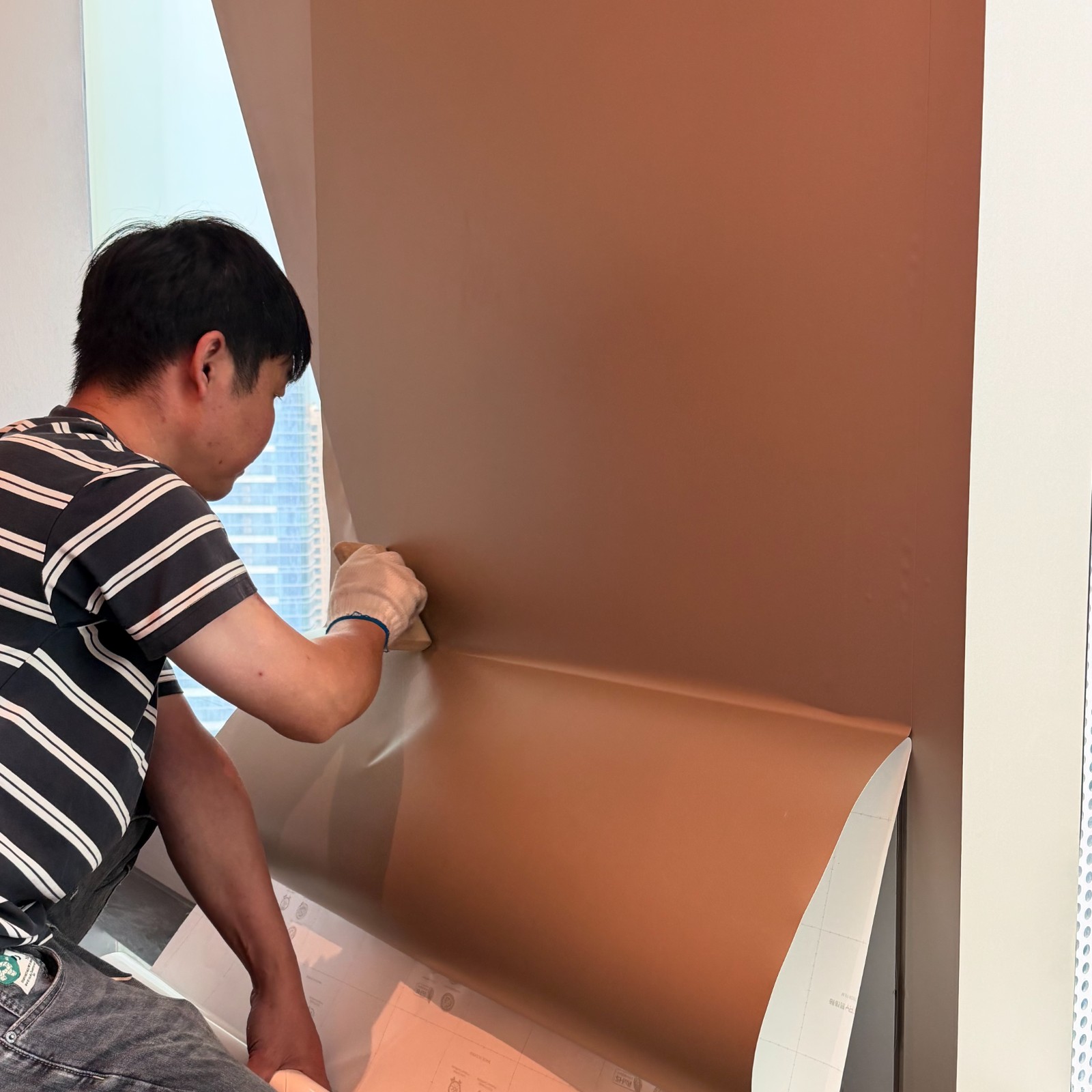
How to Properly Apply and Remove PVC Self-Adhesive Film
To fully leverage the benefits of PVC self-adhesive film while minimizing potential risks, professional manufacturers typically recommend:
Thoroughly cleaning and drying the substrate before application
Conducting small-area tests on special finishes
Avoiding prolonged exposure to direct high-temperature sources
Using even heat during removal, followed by slow, controlled peeling
Under these conditions, PVC self-adhesive film can truly achieve strong adhesion during use and residue-free removal afterward.
Why More Clients Are Choosing Hantai’s PVC Self-Adhesive Film
As a supplier deeply focused on functional decorative materials, Hantai has built clear technical advantages in the PVC self-adhesive film sector:
Adhesive systems validated through long-term environmental stability testing
Raw materials that meet environmental and durability standards
Compatibility with a wide range of substrate surfaces
Suitability for long-term projects and high-frequency use environments
Hantai provides not only products, but also a complete application logic and technical support system, helping clients achieve a true balance between aesthetics, efficiency, and safety.
Is PVC Self-Adhesive Film a Risk—or a Tool?
Returning to the original question:
Will PVC self-adhesive film damage furniture surfaces?
The answer is not simply “yes” or “no.” It depends on the product grade, application method, and understanding of the material’s boundaries.
When PVC self-adhesive film is properly designed, manufactured, and applied, it is not a risk—it is a modern material tool that combines decoration, protection, and reversibility.
If you are seeking a reliable PVC self-adhesive film solution or want to better understand material selection for different applications, you are welcome to contact the Hantai team directly. We provide professional guidance, technical documentation, and sample support to help your project achieve the optimal balance between safety and visual performance.